
You've probably seen the words "skin protectant" on a label and assumed it was just a fancy way of saying moisturizer. It is not, and the distinction matters more than most people realize.
Skin protectants are a specific class of over-the-counter (OTC) drug products regulated by the FDA. They contain approved active ingredients whose job is to temporarily shield compromised skin, reduce moisture loss, and relieve minor irritation. Moisturizers hydrate and support. Skin protectants protect, literally.
Whether your skin is dealing with the aftermath of a harsh winter, an eczema flare, or just the slow grind of daily environmental exposure, the right skin protectant can make a measurable difference. This guide breaks down the science, the ingredients, the formats, and how to match the right product to your skin's actual needs at any given time.

What Is a Skin Protectant and How Is It Different from a Moisturizer?
The confusion is understandable. Both categories include rich creams. Both can feel soothing on dry skin. But here is the regulatory reality:
A skin protectant is classified as an OTC drug product. It contains an FDA-approved active ingredient, i.e., petrolatum, dimethicone, colloidal oatmeal, glycerin at specific concentrations, allantoin, zinc oxide, lanolin, or calamine, and is legally permitted to make temporary protective claims. Think: "helps protect dry, cracked, chafed, or irritated skin."
A moisturizer is a cosmetic product. It delivers hydration, supports long-term barrier function, and keeps skin comfortable, but it does not carry OTC drug classification and cannot make the same protective claims.
The bottom line: a thick cream without an FDA-approved active ingredient is not a skin protectant, regardless of how occlusive it feels. Whereas a lightweight gel with 20% glycerin absolutely is.
|
🔬 Science Note: The FDA's Skin Protectant Monograph |
|
The FDA's OTC Skin Protectant Drug Products Final Monograph defines which active ingredients qualify, at what concentrations, and what claims are permitted. Products marketed as skin protectants must comply with this framework, which is why you'll see precise percentages on compliant labels (e.g., '45% petrolatum' or '1% colloidal oatmeal'). |
Why Skin Barrier Protection Is Non-Negotiable
The skin barrier, i.e., the outermost layer of the epidermis, does two essential jobs: it locks moisture in while keeping irritants, allergens, and microbes out. When it’s functioning properly, skin feels comfortable, calm, and resilient. When it is not, things deteriorate quickly.
Skin barrier disruption is the common biological thread running through eczema, psoriasis, rosacea, contact dermatitis, and even garden-variety dry skin. The telltale signs are familiar, and include:
• Persistent tightness or flakiness that doesn't resolve with a conventional moisturizer
• Heightened reactivity such that products that were once well-tolerated suddenly sting or irritate
• Redness, rough texture, or uneven skin tone without an obvious cause
• Increased trans-epidermal water loss (TEWL), i.e., moisture evaporating faster than it can be replenished
Skin protectants address this by forming a temporary barrier layer that reduces TEWL and physically shields compromised skin while the underlying repair mechanisms do their work. While they do not treat or cure the root condition, they do create the stable environment that recovery requires.
Understanding Occlusion: Why Not Every Skin Protectant Works the Same Way
Occlusion is the measure of how effectively a product reduces moisture evaporation from the skin's surface. Higher occlusion means a stronger physical seal, greater moisture retention, and more robust protection against environmental stressors.
Not all skin protectants, however, are equally occlusive and that is by design. Different skin states require different levels of protection:
|
📊 Occlusion Level Guide |
|
Lower Occlusion — Lightweight protection for daily use, humid climates, or oily/combination skin needing barrier reinforcement without heaviness. |
|
Moderate Occlusion — Balanced protection for everyday barrier support, mixed skin conditions, or daytime use when breathability matters. |
|
High Occlusion — Maximum moisture seal for severely dry, cracked, or compromised skin; eczema flares; overnight recovery; and harsh cold-weather conditions. |
Adjusting your occlusion level based on season, skin state, and time of day is one of the most effective, and underused, strategies in skincare.
The Active Ingredients Behind Skin Protectants
Not all FDA-approved skin protectant actives work identically. Here is a breakdown of the most common ones and what makes each distinct:
Petrolatum
The gold standard of occlusion. Petrolatum works by forming a dense, semi-occlusive film on the skin surface that dramatically reduces TEWL. At concentrations of 30–100%, it provides the highest level of moisture retention of any approved active. It does not absorb into skin, but instead, sits on the surface and creates a physical shield.
Dimethicone
A silicone-based ingredient that forms a flexible, breathable film. Dimethicone provides moderate occlusion while remaining light and non-greasy. It is particularly well-suited for daytime use or for skin that needs reinforcement without feeling sealed in. At 5–30%, it occupies the mid-range of the occlusion spectrum.
Colloidal Oatmeal
Finely milled whole oat grain suspended in a formula. Colloidal oatmeal is unique among skin protectant actives because it also temporarily relieves itch and minor irritation, making it particularly valuable for eczema-prone skin. At 0.003–5%, it provides moderate occlusion with an added soothing dimension.
Glycerin (Skin Protectant Concentration)
At qualifying concentrations (20–45%), glycerin functions as a skin protectant rather than just a humectant. It attracts and retains moisture at the skin surface while providing lighter occlusion compared to petrolatum or dimethicone thereby making it well-suited for skin that needs protection without a heavy finish.
When Does Your Skin Actually Need a Protectant?
Skin protectants are not an everyday-for-everyone product. They are a targeted tool that is deployed when:
• Skin is visibly cracked, chafed, or compromised
• You are moving into cold, dry, or wind-heavy weather conditions
• You are experiencing an eczema, psoriasis, or rosacea flare
• Skin is recovering from irritation, harsh treatments, or over-exfoliation
• You want maximum overnight barrier recovery support
In more comfortable environmental conditions or for oily skin types, a lighter occlusion level or a standard moisturizer may be sufficient. The goal is to match the tool to the task.
|
💡 Layering Protocol |
|
Step 1: Cleanser |
|
Step 2: Hydrating serum (hyaluronic acid, niacinamide, etc.) |
|
Step 3: Moisturizer |
|
Step 4: Skin Protectant (as the final step, to seal everything in) |
|
Note: Skin protectants go on last. They are designed to cap off your routine, not to replace it. |
How to Choose the Right Format
The best skin protectant is the one you'll actually use consistently. Format matters, not just for aesthetics, but because texture and weight affect how well a protectant performs for your specific skin state, environment, and routine timing.
|
Product |
Active Ingredient |
Occlusion Level |
Best For |
Third-Party Seals |
|
Skin Utility Gel |
20% Glycerin |
Lower |
Daily protection, oily/combo skin, humid climates |
NEA, NPF, NRS |
|
Skin Utility Balm |
5.25% Dimethicone |
Moderate |
All-day reinforcement, balanced skin, layered routines |
NEA, NPF |
|
Skin Utility Ointment |
45% Petrolatum |
High |
Severely dry, cracked, or flaring skin; overnight use |
NEA, NPF |
|
Barrier Therapy |
1% Colloidal Oatmeal |
Moderate |
Eczema-prone skin, itch and irritation relief, daily use |
NEA, NPF |
|
Barrier Therapy Rich |
1% Colloidal Oatmeal |
Moderate-High |
Drier skin types, cold seasons, deep nourishment |
NEA |
NEA = National Eczema Association | NPF = National Psoriasis Foundation | NRS = National Rosacea Society
Myths vs. Facts: Skin Protectants Decoded
Myth: "Skin protectants and moisturizers are the same thing, just different marketing."
Fact: They are distinct regulatory categories. Skin protectants are OTC drug products with FDA-approved active ingredients and approved protective claims. Moisturizers are cosmetics. The classification affects what the product can do and say.
Myth: "Thicker = more protective. If it's not a heavy ointment, it won't really work."
Fact: Occlusion is determined by the active ingredient and its concentration, not texture alone. A lightweight gel with 20% glycerin is legitimately protective. Texture tells you how something feels; the active ingredient tells you what it does.
Myth: "Skin protectants are just for people with eczema or serious skin conditions."
Fact: Anyone with a compromised skin barrier from cold weather, over-exfoliation, harsh cleansers, or environmental stress can benefit. You don't need a diagnosis to need protection.
Myth: "Once the skin looks better, you can stop using a protectant."
Fact: Recovery is not restoration. Even when skin appears healed, barrier function may still be rebuilding. Continued use through recovery and as preventive maintenance during stress periods supports long-term resilience.
Frequently Asked Questions
What is a skin protectant and how does it differ from a regular moisturizer?
A skin protectant is an OTC drug product containing an FDA-approved active ingredient (like petrolatum, dimethicone, or colloidal oatmeal). It is legally permitted to make temporary protective claims. A moisturizer is a cosmetic that supports hydration and long-term barrier health but does not carry OTC drug classification.
What are the most effective FDA-approved skin protectant active ingredients?
The most widely used actives include petrolatum (highest occlusion), dimethicone (moderate, breathable), colloidal oatmeal (moderate with itch-relieving properties), and glycerin at skin-protectant concentrations (lighter occlusion, hydration-forward).
Can I use a skin protectant every day, or only when my skin is compromised?
Daily use is appropriate if your skin regularly faces dryness, environmental stress, or sensitivity. For less reactive skin, skin protectants work well as a situational tool during cold weather, flares, or post-treatment recovery.
Where does a skin protectant go in my skincare routine?
Skin protectants are always the final step in a routine. They seal in the layers beneath them, i.e., serums, moisturizers, and treatments, thereby maximizing the effect of everything applied before.
What is the best skin protectant for eczema-prone skin?
Colloidal oatmeal-based protectants are particularly effective for eczema-prone skin because they both protect the barrier and temporarily relieve itch and irritation. Products with the National Eczema Association (NEA) Seal of Acceptance provide additional third-party reassurance.
Is petrolatum safe to use on the face?
Yes. Petrolatum has one of the longest safety records of any skincare ingredient. Pharmaceutical-grade petrolatum, used in most quality skin protectant formulations, is non-comedogenic and typically well-tolerated, including on sensitive and compromised skin.
What does TEWL mean and why does it matter for skin health?
TEWL stands for trans-epidermal water loss, i.e., the rate at which moisture evaporates through the skin. Elevated TEWL is a key indicator of a compromised skin barrier. Skin protectants directly address TEWL by reducing evaporation, which is why they are the preferred intervention for barrier-disruption conditions.
How do I choose between a gel, balm, and ointment skin protectant?
Match the format to your occlusion need and comfort preference. Gels suit daily use and oily-to-combination skin. Balms work for all-day reinforcement with a comfortable, breathable feel. Ointments are best for severely compromised skin or overnight recovery when maximum occlusion is the goal.
Do skin protectants expire or lose efficacy over time?
Like all skincare products, skin protectants have a shelf life. Check the PAO (period-after-opening) symbol on packaging. Most petrolatum-based formulas are exceptionally stable. Colloidal oatmeal formulas may degrade faster if exposed to humidity or light.
Should I use a skin protectant in summer or only in winter?
Year-round use makes sense for anyone with sensitive, reactive, or condition-prone skin. In summer, lighter occlusion formats (gels, dimethicone-based balms) are often more appropriate. Cold and dry seasons typically call for higher-occlusion options.
Conclusion
Skin protectants occupy a specific and irreplaceable niche in skincare. They are not moisturizers with better marketing. They are not just for people with chronic skin conditions. They are a precisely defined class of OTC drug products, formulated to do something your moisturizer legally cannot, namely, form a temporary protective layer that shields compromised skin and measurably reduces moisture loss.
The science is not complicated once you understand it. Occlusion varies by active ingredient. Format determines feel. The right product is the one that matches your barrier's current state, not the one with the most appealing packaging or the thickest consistency.
Treat your skin barrier the way it deserves to be treated. With a tool designed specifically for the job. Codex Labs offers age-appropriate skincare systems/kits that have been specifically designed to address eczema-induced symptoms such as itch, dryness, and cracking by facilitating skin barrier repair, microbiome support, and inflammation control. These include:
- BIA SKIN BARRIER ECZEMA RELIEF SYSTEM for ADULTS (18+)
- BIA SKIN BARRIER ECZEMA RELIEF SYSTEM for KIDS (4-12)
- BIA SKIN BARRIER ECZEMA RELIEF SYSTEM for TEENS (13-17)
- BIA SKIN BARRIER ECZEMA RELIEF SYSTEM for TODDLERS (1-3)
- BIA SKIN BARRIER ECZEMA RELIEF SYSTEM for INFANTS (3-12 months)
These systems/kits focus on restoring barrier lipids, calming inflammation, and maintaining hydration during winter flares. The systems contain: a glycerin-rich unscented soap that gently cleanses without disrupting the microbiome; a patented eczema relief lotion that soothes, hydrates, and fortifies the skin barrier to prevent water loss; and patented skin barrier-specific supplements that contain l-histidine and potent antioxidants that help to relieve eczema-induced symptoms from INSIDE your body.
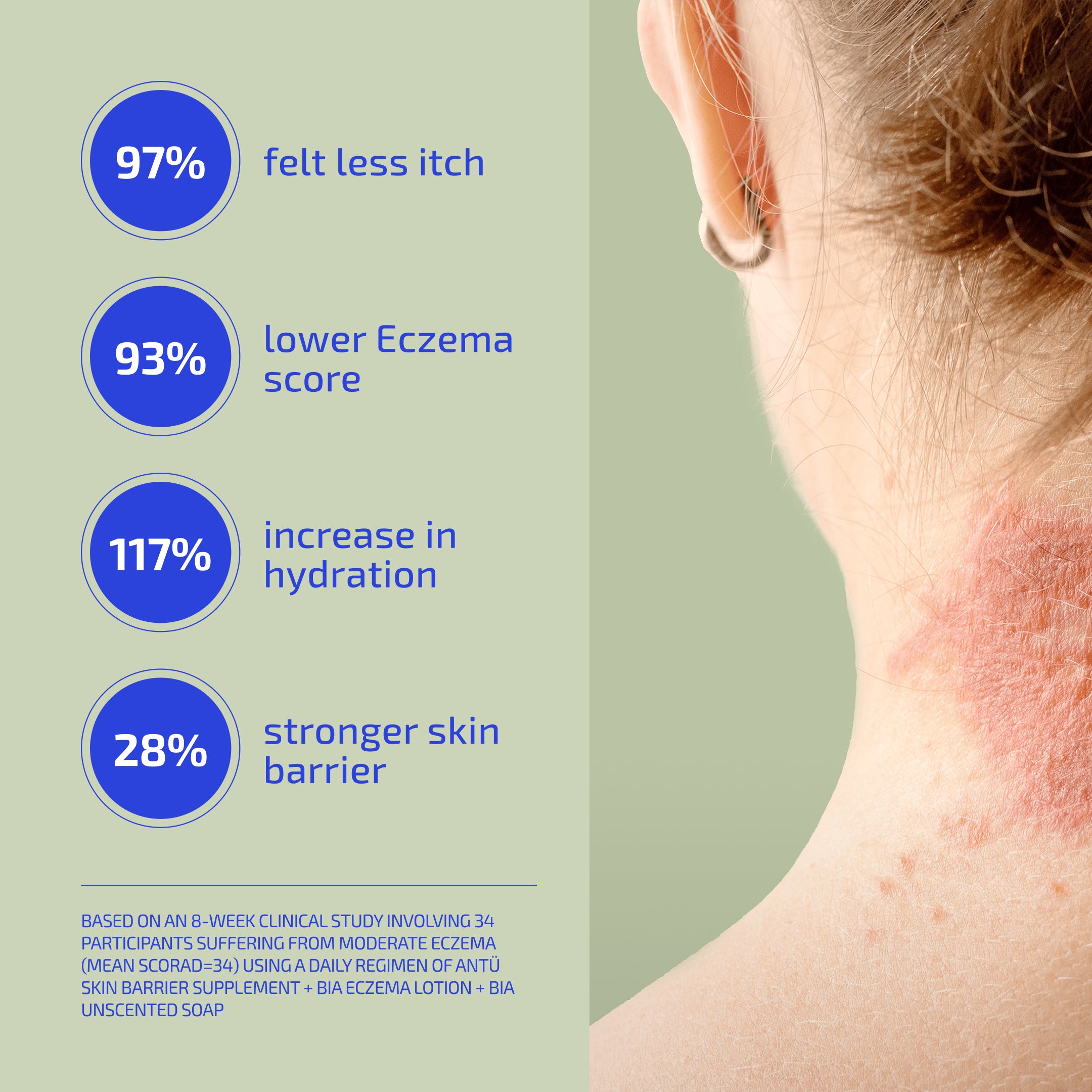
So, if you happen to suffer from eczema with flares that feel more intense and/or frequent during the winter months, Codex has just the inside-outside skincare technologies that will help you successfully manage this painfully annoying skincare condition. How can we be so sure? Because we have the clinical data to prove it!
|
→ Discover Codex Labs Barrier-Support Science |
|
Codex Labs Corp formulates every product at the intersection of dermatological science and real-world skin health. Explore our skin barrier-support collection built around clinically validated actives, transparent labeling, and skin that “actually” recovers. |
|
Visit: codexlabscorp.com |
What Users Are Saying
"I thought I just had dry skin. Turns out my barrier was wrecked. Switching to a proper skin protectant as my final step changed everything — my routine actually works now."
— Composite testimonial based on user feedback
"I didn't realize there was a difference between a moisturizer and a skin protectant until I read this. My eczema-prone skin has been so much more stable since I started using a colloidal oatmeal protectant during flares."
— Composite testimonial based on user feedback