
A plain-language, science-backed guide for adults and parents — reviewed against the current dermatology literature.
|
WHY THIS MATTERS If you've used prescription steroid creams for eczema or another inflammatory skin condition and stopping them triggered burning, spreading redness, and relentless itching that felt worse than the original problem — that experience now has a name the medical system is starting to take seriously. It's called topical steroid withdrawal (TSW). After years of being dismissed, TSW reached a turning point in 2026: the CDC approved a dedicated U.S. diagnostic code for it, effective April 1, 2027 so it can finally be tracked, researched, and recognized by insurers. Below is what the current science actually says — what TSW is, how it's diagnosed, how it affects children, and what you can do to support your skin through it. |
|
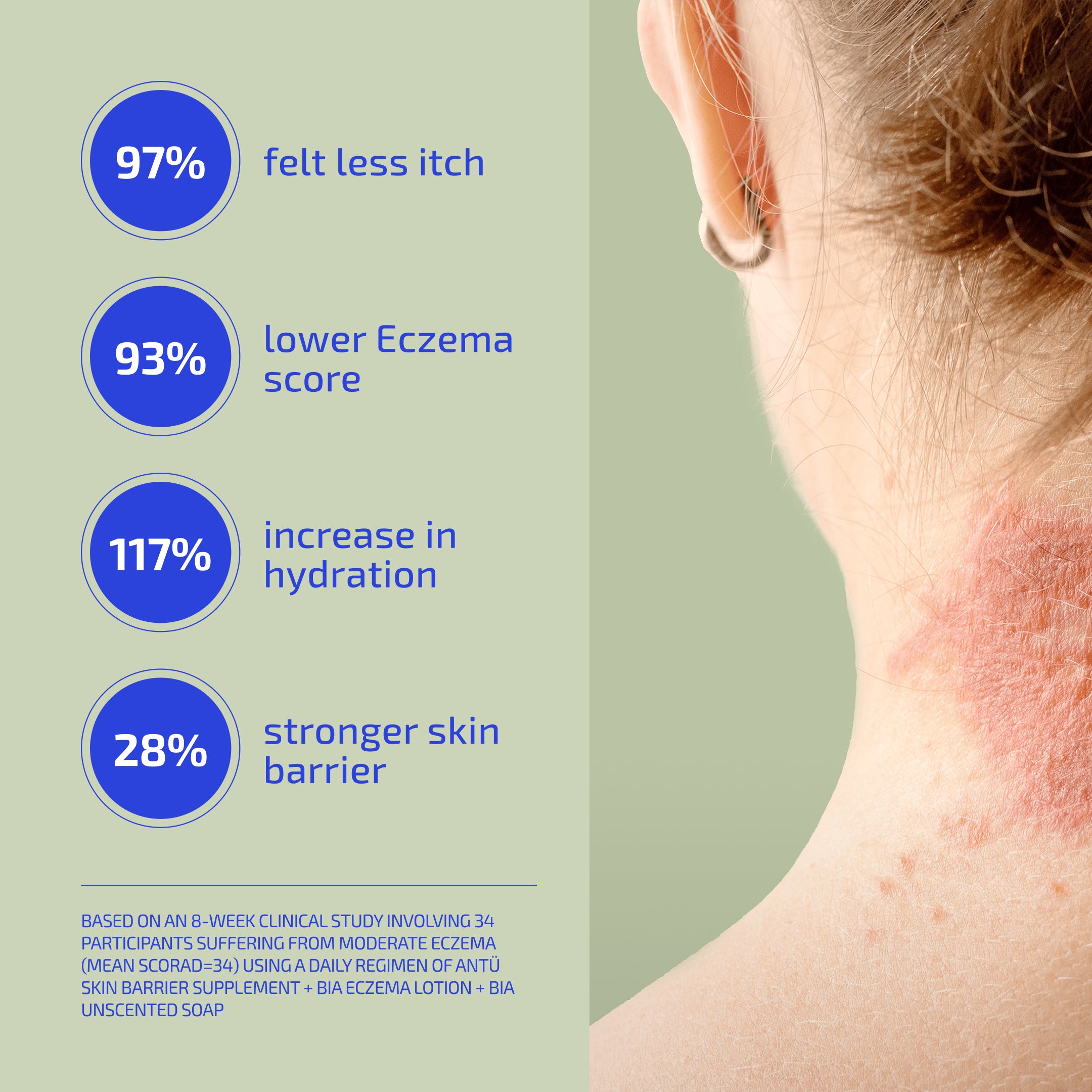
IF THIS SOUNDS LIKE YOU TSW recovery centers on one thing above all: rebuilding the skin barrier while calming inflammation. At Codex Labs, our gut–skin barrier supplements are designed to support the skin's natural barrier function during and after periods of intensive steroid use — from infants through adults: These are supplements that support barrier and gut function — not a cure for TSW. For diagnosis and a recovery plan, work with a board-certified dermatologist. Talk to a Codex telehealth clinician → |
What Is Topical Steroid Withdrawal?
Topical steroid withdrawal (TSW) — also called red skin syndrome or topical steroid addiction — is a skin reaction that can occur after stopping, or sharply reducing, the long-term use of topical corticosteroids (TCS) over large areas. TCS are the steroid creams and ointments commonly prescribed for atopic dermatitis (eczema), psoriasis, and contact dermatitis. The reaction is most strongly associated with mid- to high-potency steroids used continuously over months or years.
It's typically marked by:
- Intense, burning redness (erythema) that often spreads beyond where the steroid was applied
- Severe itching, sometimes with oozing or weeping skin
- Widespread dryness, flaking, and peeling
- Skin that responds less and less to steroids — needing higher potency for the same effect
- Heightened sensitivity to heat, light, and touch, and trouble regulating temperature

Clinicians describe two main patterns: the erythematoedematous type (redness and swelling, often on the face — the more common form, including in children) and the papulopustular type (acne-like pustules). Some recognizable signs have informal names: the “headlight sign” (redness across the face that spares the nose and mouth), the “red sleeve sign” (a rash that stops abruptly at the wrists), and “elephant wrinkles” (loose, less-elastic skin after prolonged steroid use).
A Turning Point: TSW Gets Its Own Diagnostic Code
For years, TSW was minimized within the medical community — in part because there was no way to formally record it. That is now changing. After a long advocacy campaign led by patient organizations including ITSAN (the International Topical Steroid Awareness Network) plus support from the Allergy & Asthma Network, the proposal to give TSW its own diagnostic code went before the CDC's National Center for Health Statistics (NCHS) ICD-10 Coordination and Maintenance Committee.
In June 2026, those organizations announced the result: the U.S. Centers for Disease Control and Prevention (CDC) has officially approved a dedicated ICD-10 diagnostic code for Topical Steroid Withdrawal Syndrome, effective April 1, 2027. Why it matters: until now, TSW could only be recorded under a generic “adverse effect of corticosteroids” code, which lumped it together with unrelated side effects and made it nearly impossible to measure how many people are affected. A dedicated code lets clinicians document TSW distinctly, supports the medical documentation patients need to secure insurance coverage or medical leave, and — for the first time — lets researchers track true incidence and prevalence.
Perhaps most important for patients: the new designation recognizes TSW as a distinct condition rather than simply a flare of a person's existing eczema. As the Allergy & Asthma Network noted, that distinction can help prevent clinicians from inadvertently prescribing more of the very steroids driving the withdrawal.
|
“Having an official ICD-10 code changes the landscape for patients and healthcare providers alike...” — Adapted from the Allergy & Asthma Network / ITSAN announcement, June 2026 |
A note on the code itself: as of publication, the exact alphanumeric code is being finalized in the official CDC/CMS coding tables ahead of the April 2027 effective date, and we've seen it reported differently in different places. Rather than risk printing a number that changes, we'll list the confirmed code here once the CMS addendum is public. What's certain is that a dedicated TSW code is coming in 2027.
A note on language: a code in the classification system is not the same as full clinical consensus. TSW remains an actively researched and, in some circles, debated condition. The 2027 codes are a major step toward recognition and data — not the final word on mechanism or treatment.
How Is TSW Diagnosed?
A central challenge is that TSW can closely mimic a flare of the very condition being treated. That resemblance means it's often misread as worsening eczema — leading to more steroids, which can deepen the withdrawal. For that reason, TSW is treated as a diagnosis of exclusion: other causes — eczema flares, allergic contact dermatitis to steroid ingredients, and secondary infections — should be ruled out first, sometimes with patch testing.
A 2025 review in Pediatric Dermatology (Ahuja & Lio) suggested clinicians consider TSW when one or more of these are present:
- A history of needing escalating steroid treatment — higher potency, more frequent use, or larger amounts over time for the same symptoms
- Abrupt redness, persistent burning, or widespread pain after stopping steroids — notably different in character from the original condition
- Persistent flaking and dryness resembling widespread exfoliation that resists moisturizing
More recently, researchers have worked to put this on firmer footing: a 2026 study used a modified Delphi consensus method to develop formal diagnostic criteria — an important move from “we recognize the pattern” toward standardized, testable definitions.

TSW in Children: What Parents Should Know
TSW has historically been described mostly in adults, but children — including infants — are not immune. The catch is that the pediatric evidence is still thin. A 2025 systematic review (Ahuja & Lio, Pediatric Dermatology) gathered every reported pediatric case in the literature and found just 21, and even then the authors noted the data was inconsistent from case to case. So these figures point to real patterns, but they rest on small numbers — read them as signals, not statistics:
- Mean age at presentation: about 7.4 years; cases have been reported in children as young as infancy.
- About 62% of cases were girls.
- Among cases with site data, 6 of 10 involved the face — a higher-risk area because the skin is thinner and absorbs more.
- Among cases with potency data, 9 of 13 involved escalating steroid strength over time.
- Where the subtype was recorded, the erythematoedematous (redness-and-swelling) form was most common (3 of 4).
Most of these children had originally been treated for eczema. And while long-term use is the typical risk factor, the literature includes cases after as little as a few months of continuous use — a reminder that duration isn't the only factor. If you notice your child's steroid cream losing effectiveness, or a severe skin reaction after stopping, raise TSW directly with their dermatologist.
|
“My daughter's skin had been through so many rounds of stronger and stronger creams. When we stopped, she looked worse than ever. No one told us this was even a possibility.” — Verified Patient Parent, Codex Telehealth Patient Community |
Myths and Facts About TSW
"TSW isn't real — it's just an eczema flare."
TSW is increasingly recognized as a distinct pattern, and the CDC has approved a dedicated U.S. diagnostic code for it, effective April 1, 2027.
"Only adults can get TSW."
Children, including infants, have been documented with TSW. Pediatric cases are likely underreported because of diagnostic difficulty — not because they don't happen.
"You have to use steroids for years to develop TSW."
Long-term use is the most common risk factor, but cases have been reported after only a few months of continuous use in children. Potency, frequency, area, and location (face and genitals are higher-risk) all matter.
"TSW resolves quickly once you stop steroids."
Recovery is often prolonged — many patients report symptoms lasting months to years. Management focuses on barrier repair, itch control, and monitoring, sometimes with systemic therapies under dermatologic supervision.
Frequently Asked Questions
What causes TSW?
The leading idea is that skin becomes reliant on external corticosteroids to keep inflammation in check; when they stop, the skin rebounds. The precise mechanism isn't fully understood and may involve changes in glucocorticoid receptors, nitric-oxide-driven blood-vessel dilation, and mitochondrial pathways.
How is TSW different from an eczema flare?
TSW tends to involve burning pain (not just itch), redness spreading beyond the treated area, and symptoms that feel different in character from the original condition. An eczema flare usually improves with steroids; TSW does not, and may worsen.
Is my child's eczema treatment safe?
Topical corticosteroids remain effective and important for eczema when used appropriately — lowest effective potency, smallest area, shortest duration, with good moisturizing. Discuss concerns with your dermatologist, especially if the medication seems to be losing effect.
Will the new ICD-10 code help get care covered?
A dedicated code is an important step toward insurance recognition of TSW as a distinct diagnosis, which may support access to specialist care. Once the code takes effect on April 1, 2027, ask your provider to document TSW specifically.
What treatments exist for TSW?
There's no universally accepted protocol yet. Emerging approaches include biologics targeting Th2 cytokines (e.g., dupilumab), JAK inhibitors, cyclosporine, and hyperbaric oxygen therapy (HBOT), alongside foundational gentle skincare, barrier repair, and avoiding known irritants. Always consult a board-certified dermatologist.
How Codex Labs Supports Barrier Recovery
Codex Labs Corp develops science-backed skincare and supplements for people living with chronic inflammatory skin conditions. Because barrier repair sits at the heart of TSW recovery, our gut- and skin-barrier supplements are formulated to support the skin's natural barrier function — which is especially relevant during and after intensive steroid therapy:
We're also researching hyperbaric oxygen therapy (HBOT) used alongside barrier-repair topicals and supplements. And our telehealth initiative connects patients with clinicians who understand the full picture — including TSW.
These supplements support barrier and gut health; they are not a treatment or cure for TSW.
|
Think you or your child may be experiencing TSW? Start by speaking with a board-certified dermatologist familiar with the condition. Careful diagnosis, barrier repair, and a thoughtful transition plan can make a meaningful difference in recovery. |
References
[6] Topical steroid withdrawal: dissecting the controversy. Front Med. 2026.